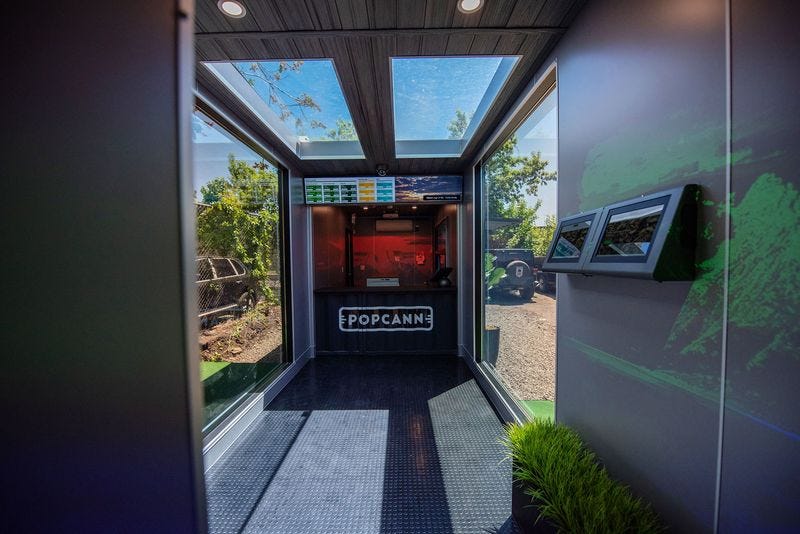
While both federal and provincial governments haven’t quite worked out how to legalize brick-and-mortor weed consumption lounges yet, Ontario is certainly testing the market.
The Toronto Craft Beer Festival announced today (March 12) it plans to include a legal cannabis-friendly zone at its upcoming event at Ontario Place in June.
The annual expo highlights the best of Ontario’s craft brew offerings and sees over 10,000 attendees, all sipping on homegrown suds — no Big Beer allowed. This year, if guests find they’ve shotgunned a few too many salted caramel stouts or rhubarb saisons they can kick back with a come-down joint, or forgo the taps all together, on the aptly named “potio”.
Abi Roach@abiroach
The Hotbox POTio is coming to an event near you …
First stop The Toronto Craft Beer Fest
First stop The Toronto Craft Beer Fest
Toronto’s Craft Beer Festival, HotBox Cafe, and Detonate Group Partner on First Legal “POTio”
Cannabis Smoking Lounge Takeover Happens June 21st-23rd at Ontario…
newswire.ca
35 people are talking about this
The provincially-backed event will make history as the first legal age-gated consumption lounge open to the Canadian public. The sesh section will be designed by Detonate, a cannabis branding agency, and hosted by Abi Roach — founder of the Kensington Market weed hub, the HotBox Cafe.
“We want to offer people a place to come down from the beer. You don’t have to consume cannabis to experience our creative, chill, and vibrant potio,” says Roach in a release.
The long-time pot advocate and entrepreneur will hand-pick her customer service team, along with a few experienced sales representatives. “Potio” staff are tasked with “ensuring attendees are educated on the various ways to safely consume cannabis” and spotting signs of over-consumption. Roach has over two decades of experience hosting weed events across the Greater Toronto Area, including running one of the country’s most popular smoke spots.
“What makes this one really special — other than our partners — is that it’s now on a provincial level, meaning the government is finally ready to listen to what Canadians actually want,” she says.
Organizers bill the alcohol- and tobacco-free patio as “a comfortable break from the beer and noise during the festival”. To reduce the risk of cross-fading — a term used to describe nausea, dizziness, and disorientation that can come with mixing excessive amounts of alcohol and cannabis at the same time — Roach and her team will be on deck to answer questions and guide the experience.
While research is limited primarily to anecdotal evidence, animal studies show cannabis, specifically the compound cannabidiol (CBD), can help mitigate the risk of liver disease, lower blood pressure, and reduce the severity of neurodegeneration, behavioural, and cognitive impairments — all side effects associated with excessive drinking.
Studies from Free Radical Biology & Medicine also show CBD acts as an antioxidant, limiting ethanol-induced damage to organ tissue, even prompting cell regeneration in some cases. Even HelloMD cites CBD oil as a holistic “hangover elixir” for its nausea- and headache-busting properties.
Some experts do warn, however, that cannabis can inhibit nausea and vomiting, the body’s natural defence against alcohol poisoning.
While there are currently no legal public cannabis lounges in Ontario or B.C., this move shows a promising step in the right direction. The plant was federally legalized for recreational use in October of last year and most provinces are still strugging to set-up basic retail distribution systems.
“What better way to optimize on a sensory experience than by adding some cannabis to the mix, and who better to help us execute than Abi and the HotBox team?” adds Tony Millar, founder of Toronto’s Craft Beer Festival in the release.
“Cannabis is finally legal across Canada and we couldn’t be prouder to celebrate it together.”